What to make of Pope Leo XIV’s Magnifica Humanitas
The Church says every human has infinite, unconditional dignity. That's a beautiful foundation…and nearly useless as a guide to building AI systems that actually respect it.
I finally sat down and read Magnifica Humanitas (“MH”). While I am neither a Catholic nor a Christian, I am deeply interested in the Church’s views on ethics and values. The Holy See, and the Catholic Church more broadly, is one of the only organizations that has such a consistent track record of wrestling with these issues over long time horizons, and which considers exploring and giving guidance on these questions as one of their central roles. Moreover, the Church is situated outside of the standard technologist-based AI ethics and D.C. think tank communities, whose perspectives are shaped by their proximity to the technology and their respective incentives, funders, and motivations. The Church is one of the only serious players at this level. It is hard to think of another major organization that has a similar tradition and focus on reflecting deeply about global values, the nature of humanity, the value of labor, and humanity as a whole.
While reading this, the development of Catholic doctrine struck me as having strong similarities to that of the Chinese Communist Party (CCP): change is incremental, cumulative, and self-referential. No new ideological position can be articulated without first situating it within the inherited theoretical tradition. And, while ostensibly proposed and authored by a single leader, official publications are ultimately refined and approved by a core group of scholars and elders. Whereas the CCP must first cite Marxism-Leninism, Mao Zedong Thought, Deng Xiaoping Theory, the Theory of Three Represents, the Scientific Outlook on Development, and Xi Jinping Thought on Socialism with Chinese Characteristics for a New Era before presenting any new theories or ideological positions, the Holy See references relevant prior scholarship. The Vatican, however, has a longer history and more broad scholarship than the CCP from which to draw.
Magnifica Humanitas
Pope Leo XIV begins by presenting an overview of the development of the Church’s social doctrine from 1891, tracing its evolution and maturation up to the present day, providing links to each related historical document. Some of these are optional, but others, like Dignitas Infinita (“DI”), are required reading if you are to understand the Pope’s argument.
Magnifica Humanitas poses grand questions that it claims “can no longer be avoided,” such as “Where are we going? Toward what goal do we wish to orient ourselves? What direction should we choose as a people and as a human community?” This is a promising starting point.
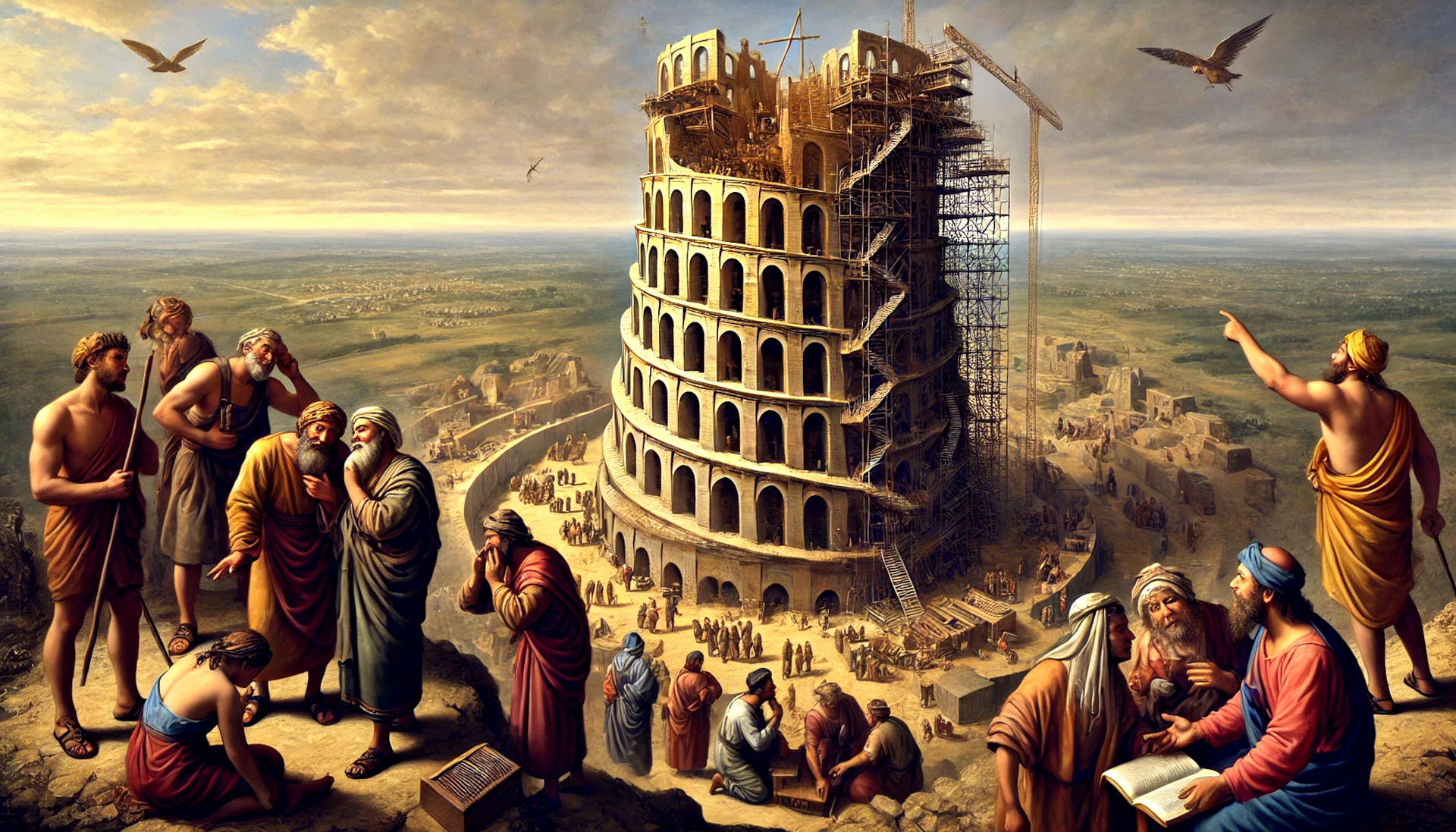
The Pope then makes a comparison between two biblical stories, building the Tower of Babel and the rebuilding of Jerusalem, to present two starkly different approaches and sets of values: one based on human arrogance and a desire for power and one that prioritizes shared responsibility and communion. Clearly he is worried that AI development is currently building a Tower of Babel.
To alter this path, the Pope encourages us to “establish standards for discernment — the dignity of the human person, the universal destination of goods, the preferential option for the poor, care for our common home and peace — and let us translate these standards into practices such as responsible planning, the assessment of human and social impact, the inclusion of the most vulnerable, the promotion of digital literacy and guiding research and industry toward justice and peace.” So far, so good.
The Pope then makes it clear that this is firmly the fair domain of the Church. The Church sees its mission as entailing “a responsibility for the way in which social relations are built.” Furthermore, the Church does not consider itself as representing one nation or another, but rather as responsible for “the entire human family.” (MH §19). All in all, an encouraging preamble.
While MH covers a lot of ground, rather than summarize the entirety of MH, I want to focus on the Pope’s conception and use of dignity, which the document mentions exactly one-hundred times.
What is the Church's conception of dignity?
MH references a number of other foundational documents as it explores the idea of dignity, but the most important of these is Dignitas Infinita, which is well worth a careful reading on its own. It was published in 2024 as the result of a five-year drafting process and represents the Church’s most complete exposition of dignity.
According to the Church, dignity is intrinsic in our very being. It does not vary based on what a person does or possesses, it is not granted; it is part and parcel of being human, prior to and independent of any lived experience. Simply by existing, every person possesses "infinite dignity.” The religious origin stems from the biblical teaching that humans are created in the image and likeness of God. Therefore, since dignity isn't conferred by society, it also can't be withdrawn by society (DI §15). The practical implication is that no person should ever be treated as instrumental—a resource, a data point, an instrument for someone else's purposes—because their dignity is not tied to their utility in the first place.
MH and DI both refer to the concept of "situated anthrocentrism,” which “recognizes the human being as a creature embedded in a network of relationships with other living beings and with all of creation. Fidelity to the truth requires integrating the possibilities offered by technology within a framework marked by wisdom, which is capable of safeguarding both the dignity of each person and the future of our common home” (MH §237 ref. Laudate Deum, 2023, §67).
This appears at first like an exciting premise from which to delve deeper into what dignity means in practical context, but unfortunately “situated anthrocentrism” in the Church’s view overlooks, or at least doesn’t attempt to deal with, our situated social selves, focusing only on humanity’s relationship with other species and the planetary ecosystem. I think this is a mistake and a missed opportunity to explore how dignity is experienced within society and between individuals.
This brings me to my primary criticism and main difference: the Church’s ontological basis for dignity doesn’t really help us or give meaningful guidance.
The insufficiency of the Church’s approach
The idea of “inherent dignity” is fixed and straightforward, and it doesn't depend on anyone's permission. If dignity were the kind of thing other people or institutions could grant, it would also be the kind of thing they could take away. But this approach also has severe limitations, both in practical application and, to some extent, in logical vigor (if that is a thing).
Ontological dignity (dignity as a fact about what someone is, independent of experience or circumstance) is, by its own definition, a fixed constant. It's the same in the unborn child and the dictator, the same whether someone is engaging in acts of charity or torture. And a constant, by definition, can't help you differentiate between two things. This is, I think, the real significance of the fourfold distinction DI mentions: ontological, moral, social, and existential dignity (DI §7-8). The document needs three categories other than ontological dignity to explain how dignity acts differently across lived experience, because the ontological type never changes. Extreme poverty doesn't touch someone's ontological dignity at all; it's a violation of their social dignity, a kind of contradiction between what someone is and how they're forced to live (DI §8). Ontological dignity is, for all practical purposes, inert. It's a foundation everyone shares equally, all the time. And a foundation, however solid, tells you nothing about whether anyone actually has shelter, whether in Shinar or Jerusalem.
Instead of treating dignity primarily as a fact about what a person is, I think we should view it primarily as something that is experienced in how a person is actually seen and treated. This is the phenomenological approach: rather than describing a person from the outside, as an instance of a category, we focus on the lived experience itself. We see how dignity is impacted when we are recognized, included, heard, dismissed, processed, or ignored. Our social experience becomes the center. Dignity, in this view, isn't a property a person carries around like a blood type. It's something that gets enacted (or denied) in the moment one person is addressed, looked at, listened to, or looked through by another.
Dignitas Infinita brushes up against this idea (before shying away) when it mentions "the relational structure of the human person" (DI §26), and even cites, in a footnote, the French Jewish philosopher Emmanuel Levinas, whose ethical theory starts from the claim that we become responsible for another person in the moment we encounter their face–not as a consequence of some prior fact about what we both are, but as the foundational ethical event itself (DI §13). The Church references this but then shies away from further exploration by tucking it into a footnote. I propose roughly the reverse: put the encounter—the actual moment of being recognized or not—at the center, and push the metaphysical claim down to a footnote.
Why does this matter practically? Because viewing everyone as having infinite, equal, unconditional dignity doesn't allow you to discriminate between two competing options or various degrees. Two AI hiring algorithms, two AI chatbots, two tax policies, two data sharing policies can each honestly claim to respect the dignity of the human person, so it can't help anyone choose between them. But what is it actually like, from the inside, to be evaluated by this algorithm, to call this hotline, to be the person used to train this model is a question you can investigate and answer. You can interview people. You can read the transcripts. You can ask whether someone walked away from an interaction feeling like a person who mattered, or like a data point that was processed.
This is also where I think Magnifica Humanitas's focus on AI becomes a limitation rather than a strength. So much of the conversation around AI gets stuck on questions like “what counts as intelligence," whether a system is "aligned," whether we're approaching artificial general intelligence or artificial superintelligence. These are hard questions that should be asked, but I'd argue that their emphasis on AI is misplaced. Whether someone is treated as a full person or as an impersonal raw material doesn't actually depend on what kind of system is doing the treating. A bureaucratic form, a hospital intake process, a customer-service phone tree, and a large language model can all fail people in the same way—by reducing them to a category, a number in a queue, data to be analyzed—regardless of how "intelligent" any of them are. If we're going to talk about alignment at all, I'd rather talk about dignity alignment: does engaging with this system, AI or otherwise, tend to produce the experience of being recognized as a person, or the experience of being processed and dehumanized? Does it increase or decrease agency, autonomy, alienation, and justice? These questions are not just relevant to AI. They are tech-agnostic. They aren't really even about technology at all. Technology provides a lens through which we can bring these into greater focus and relief, but they are fundamentally questions about what it means to flourish as a human being. We first need to figure out the dignity question, and then apply it to AI and other technologies.
I have much more to say about this (and much more to think through), but this essay is already too long. Let me close by saying that I think the inherent dignity approach is not only limiting and unhelpful, but also leads to logically unsound extensions. The Holy See states that “Only this inalienable character of human dignity makes it possible to speak about human rights” (DI §14). This is an unsupported assertion that simply isn't true. I would go so far as to argue that this reliance on inherent dignity is a major reason that enforcing human rights has been so difficult since the adoption of the UN's 1948 Universal Declaration on Human Rights; it doesn’t allow for gradations or measurements of infringements upon dignity. It most certainly does not, as Pope Leo XIV proposed in MH, “establish standards for discernment.”
In 2022, I highlighted the exhortation of another Pope, Pope John Paul II, “to look more deeply at man” (Dignity, Technology, and Global Order, p. 53), which I still believe is our most important task. This is the main focus of my project going forward and I hope you will follow along as I explore these issues over coming weeks and months.
